
Extract from back number of British Birds magazine: Diet variation for Southampton kingfisher - but did it flavour the blackberries with a pinch of salt?
Extract from back number of British Birds magazine: Diet variation for Southampton kingfisher - but did it flavour the blackberries with a pinch of salt?
 |
| A new purpose in prospect for this North Sea platform? |
ARTIFICIAL nest sites for kittiwakes could be created on a gas platform in the southern North Sea.
As of June this year, the Wenlock platform - which sits in 90ft of water some 98km north-east of the Bacton gas terminal in North Norfolk - already had an estimated 69 pairs of this declining seabird.
But it could have even more if a joint project involving the site's operators, Alpha Petroleum and Energean UK, along with offshore windfarm developer Orsted proves viable.
Orsted has run into choppy water with conservation organisations such as the RSPB over its Hornsea Four project which, it is feared, could have an adverse impact on marine species such as kittiwakes which are disturbed (and threatened) by rotating turbines.
It hopes that 'repurposing' gas platforms located away from windfarms could provide nesting opportunities and 'compensate' for any harm caused by turbines.
 |
| Nesting kittiwakes |
It would also be cost-effective because it would save the Danish company from having to install other forms of artificial nesting structure.
The Wenlock platform is said to be nearing the end of its economic producing life and is scheduled for the plugging and abandonment of wells from next year.
Says Jamie Baldwin, Hornsea Four Project Director at Orsted: "We are always keen to explore innovative opportunities to ensure that our projects are developed, constructed and maintained as sensitively and sustainably as possible.
"We look forward to continuing our work with Alpha and Energean to investigate the potential for repurposing existing offshore structures as part of a tool-box of ecological compensation measures."
 |
| Kittiwakes and other birds at the Wenlock platform Below: The publication is available (price £2) as an e-book via Kindle 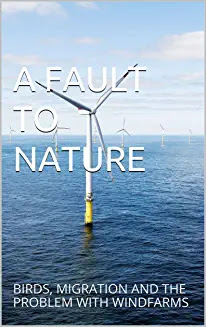 |
 |
| Mitigation site is being created chiefly for benefit of waders |
ON the shores of the Humber Estuary outside Grimsby in North East Lincolnshire, a new man-made haven for wetland wildlife is starting to appear on 35 acres of fields formerly used to grow cereal crops.
It will be known as Novartis Ings - acknowledgement to departing multi-national chemicals giant Novartis which donated the land.
The company left this as its legacy to the local community after manufacturing at the site next door for over 70 years.
Why is this site being created?
The aim is to provide mitigation habitat for forthcoming industrial development on nearby land which will no longer become hospitable to roosting and breeding waders, wildfowl and other wildlife.
Says designer Roger Wardle: "The site will be providing wet grassland that is in mosaic with a storage lagoon, scrapes, islands and spits with slightly higher points to help the birds spot potential predators.
"The appearance may seem open and bare habitat, but that is just what the waders need."
Water levels will be topped up from the nearby Mawmbridge Drain just before it would otherwise be discharged into the estuary.
Some of that water will be stored in the lagoon and released in dry times to increase the habitat’s resilience to drought.
What birds are likely to use the site?
Replies Roger: "Oystercatcher, lapwing, redshank and other waders used to breed in the area but are now very scarce or don’t breed at all locally due to a lack of suitable breeding habitat.
"This new site, although primarily designed for roosting, is likely to provide renewed opportunities for lost breeding waders, such as lapwing, to return.
 |
| Lapwing - will it make a breeding return? |
"Pyewipe Estate, just down the road, takes the local name for the lapwing, indicating that in the past they were common in the area.
"As the habitat develops it is hoped that other species will also breed such as ring plover and even terns if the numbers of gulls is not too high.
"Some islands, especially in the lagoon, will have gravel and shell toppings that benefit wader roosting by simulating natural features associated with the estuary."
"Cattle will be introduced to the site between spring and autumn to help control the vegetation the target species for this site much preferring short grass or bare ground.
"The cattle also make large footprints at the water’s edge creating micro-habitats for lots of insects that the birds subsequently feed on, not to mention the large biomass of invertebrates that live on dung pats.
"The birds will be easily visible from the edges and the sea wall.
"As with all sites like this, we would ask that people respect the site, keep quiet and generally try to reduce bird disturbance.
"Waders can be fickle creatures and flocks are especially vulnerable to disturbance.
"Once the most nervous bird takes flight, it panics them all.
"The tall green fencing around the site, in part helps to break up the shape of people and pets."
Ends Roger: "Only time will tell - Novartis Ings might not be an overnight success.
"However, we are very optimistic that the site will make a significant environmental contribution in conserving the waders of the Humber."
 |
| How arriving birds will see the site as they fly in |
 |
| Sign describing why a decision was taken to 'rescue' the cygnets |
According to a sign posted on a bridge at the country park, Cleethorpes Wildlife Rescue took action after "multiple" reports that the adults were trying to drown their own cygnets.
Normally, it is a criminal offence to take birds from the wild and hold them captive, but the 'rescuers' took the view that the welfare of the cygnets was a higher ethical consideration than wildlife legislation.
They hope their action will prompt donations to further their safeguarding activities.
It is not known why the swans turned murderous towards their own offspring.
 |
| One big happy family - but, alas, things turned sour |
 |
| One of the adults turns nasty - but why? |

HOW about this for a description of a bird foraging among fallen leaves in autumn?
"Furtive rustles of a blackbird fossicking in the crispy beech leaves: toss and pause, toss and pause - quick movements that appear bad tempered but probably effect a need to listen for danger between bouts of noisy rummaging."
We have all seen such activity and, given the familiarity of the species, probably not deemed it worthy of a second glance.
But to author-observer Amy-Jane Beer, a prose-poet if there ever was/ were one, it provides a magical moment.
Here she is again, this time describing a much smaller and more elusive bird:
"Two impish forms helter-skelter around the trunk of a tree.
"They alight just long enough to glimpse a lick of flame on each head, then off again a dizzy, spiralling chase. Goldcrests!"
Why is that women are able and willing to write so colourfully, but seldom men?
The recently-published book from which these passages are taken is The Flow - Rivers, Water and Wildness.
It is an impressive 400-page exploration of the significance of rivers (and water) in art, literature, science history, politics, scripture, mythology, folklore and more.
Beer is not, strictly speaking, a birder. She is mistaken in describing dippers as "widespread across the length and breadth of Britain" - they are seldom seen in, for instance, Lincolnshire, East Anglia and the South-east.
But it is easy to forgive an author who describes so vividly a flock of 60 or 70 lapwings "flying in close formation, then exploding apart as though each bird were suddenly overwhelmed with an urge to freestyle.
"They slew and tumble, scattering across the sky."
Alas, birds figure relatively infrequently in Beer's narrative because she has so much else to cover.
Early on, for instance, there is an intriguing but all-to-brief section on "atmospheric rivers".
These, she explains, are invisible "gas rivers in the sky - conveyors of moisture across, for example, the Atlantic to the Caribbean, bringing rain to Britain and providing a reminder that a river is not necessarily a bounded entity, merely a ribbon of water in a channel."
Beer's spotlight also falls on a tragic incident that occurred in August 70 years - a flood in the North Devon town of Lynmouth that claimed 34 lives.
This followed an episode a couple of days earlier when Staines in Middlesex had its heaviest rain in years.
Could either or both be linked to Project Cumulus, an Imperial College-backed experiment in which the RAF had been engaged to spray salt into clouds over Bedfordshire in an attempt to "manipulate" the weather to create rainfall?
Is there a springboard here for more research - and perhaps another book?
It would be a challenge, not least given, as the author notes, "the alleged disappearance of classified files".
The author's research was far from being desk-only - she travelled extensively all over Britain to talk with a wide range of people and to explore rivers, both wild swimming (her passion) and from on board a kayak.
Around Cambridgeshire and Lincolnshire, she was evidently unimpressed with the extenside man-engineered modifications to the River Welland which she says, most perceptively, "lends a sense of nowhereness to the place".
It was hereabouts, of course, that King John famously lost his treasure - said to have been "sucked down by the whirlpool". It would be interesting to know her take on this famous event in English history - perhaps she is saving that up for a future piece of writing.
The Flow contains another fascinating section in which the author visits the Hogsmill river, near Epsom in Surrey - scene of a famous and disturbing 1852 painting by the Pre-Raphaelite artist, John Everett Millais.
Based on a scene in Shakespeare's Hamlet, it depicts the floating body of the drowned Ophelia.
Beer notes that Millais broke with tradition in painting the river's flow from right to left, "spurning the convention that regarded leftward orientation as literally sinister".
While on the riverbank, she detects two bird that would definitely not have occurred there in Victorian times - little egret and ring-necked parakeet.
Of the former, she writes: "To my eye, egrets are exotic and reminiscent of improbable assemblages of wildlife adorning religious paintings and trendy wallpaper."
Such is their "angelic whiteness" that she doubts if Millais would have been able to resist including them - plus the parakeets and orange carp - if he were to revisit the same spot today.
The author has obviously referred to Shakespeare's play to compare the flowers he references in Ophelia's speech with what she sees, but she disregards, either by accident or intent, Millais' depiction of a robin on the left of the painting.
Why did Millais include the bird? In recognition of Ophelia's pre-death utterance: "For bonny sweet Robin is all my joy."
But the artist is mistaken to have included it. If the playwright had been referring to the bird, he would have used the terminology of the time - "ruddock" or "robin-redbreast".
The line sung by Ophelia would almost certainly have been borrowed from a bawdy song of the day - and, incidentally, a clear indication that she and Hamlet had enjoyed a physical relationship prior to their break-up.
Any complaints about Beer's book? Just one - the patronising section in which she bosses readers on the need to be sparing with their use of water - "to choose low-volume flush, to wash bedding and clothes less, to use grey and ranwater on garden instead of sending it down the drain . . ."And so on, and so on.
As if educated readers would not be aware of all this anyway!
This is such an admirable and stimulating book that it will doubtless and deservedly be reprinted in paperback - but, please, only after the sermonising has been removed.
The Flow is published by Bloomsbury at £18.99 and is available wherever books are sold.
 |
| The robin (left) is identifiable, but are there other birds (or hints of birds?) in Millais' famous painting (which resides in London's excellent Tate Gallery) |
 |
| The proposed development is adjacent to a Northern Powergrid substation and near a Tesco superstore |
The 0.68-hectare site, which is located to the south-east of Hewitt's Avenue in New Waltham, near Cleethorpes, has been earmarked for an energy storage depot.
 |
| Dawn chorus - blackcap in full voice in May |
 |
| Chiffchaff - another of the site's breeding birds |
"An attractive landscaping scheme including tree and hedge planting - will be submitted within the full planning application to help to reduce the aesthetic impact of the development and improve biodiversity."


