Thursday, 31 March 2022

NEW RESEARCH PROJECT WILL MEASURE IMPACT OF RODENT POISON ON KESTRELS


Are kestrels, such as this bird, succumbing to rodenticides? 


ALARM bells are sounding over a continuing decline in the British population of kestrels.


It is thought that poison laid to kill rats and mice could be a significant contributor to the decrease.


Rodents are principal diet of kestrels and, if the birds, too, ingest the poison, they are at risk either of perishing or of breeding failure.


Owls, eagles, buzzards, harriers and other raptors are also vulnerable to rodenticides, often used on farmland and game-shoooting moorland.


Poisons are also widely used by commercial contractors  on assignment for local authorities and for businesses such as food factories, restaurants and hotels.


But, in the first instance, a new RSPB pilot project will focus on the extent, if any, to which the kestrel is a victim.


Earlier this week the charity began recruiting for  "an enthusiastic and experienced" fieldworker to spend May and June of this year as a research assistant to a PhD student.


Kestrels are said to be a "high priority bird species in the UK following declines of around 35 per cent over the last 30 years, and it is hoped this project will "contribute to efforts to understand the causes of decline".


The fieldwork will be carried out at kestrel breeding sites around Poole in Dorset.


Says the job description: "You will work with other team members surveying and trapping small mammals, monitoring kestrel nests and collecting samples. 


"You will need to maintain good relations across the team and with the landowners."


The RSPB is understood to be collaboration with  the University of York, the Centre for Ecology & Hydrology, the Health & Safety Executive and  Bournemouth University.


The recruit, who will be paid the equivalent of £21,622.00 - £23,987.00 per annum, will need to have a head for heights.


For further information, contact Malcolm Burgess (principal conservation scientist) at:  Malcolm.Burgess@rspb.org.uk.


The deadline for applications is April 8.


Looking for a tasty mouse - a kestrel hovers over rough grassland

Tuesday, 29 March 2022

JOB UP FOR GRABS AS RSPB CONTINUES RESEARCH INTO IMPACT OF WINDFARMS ON SEABIRDS


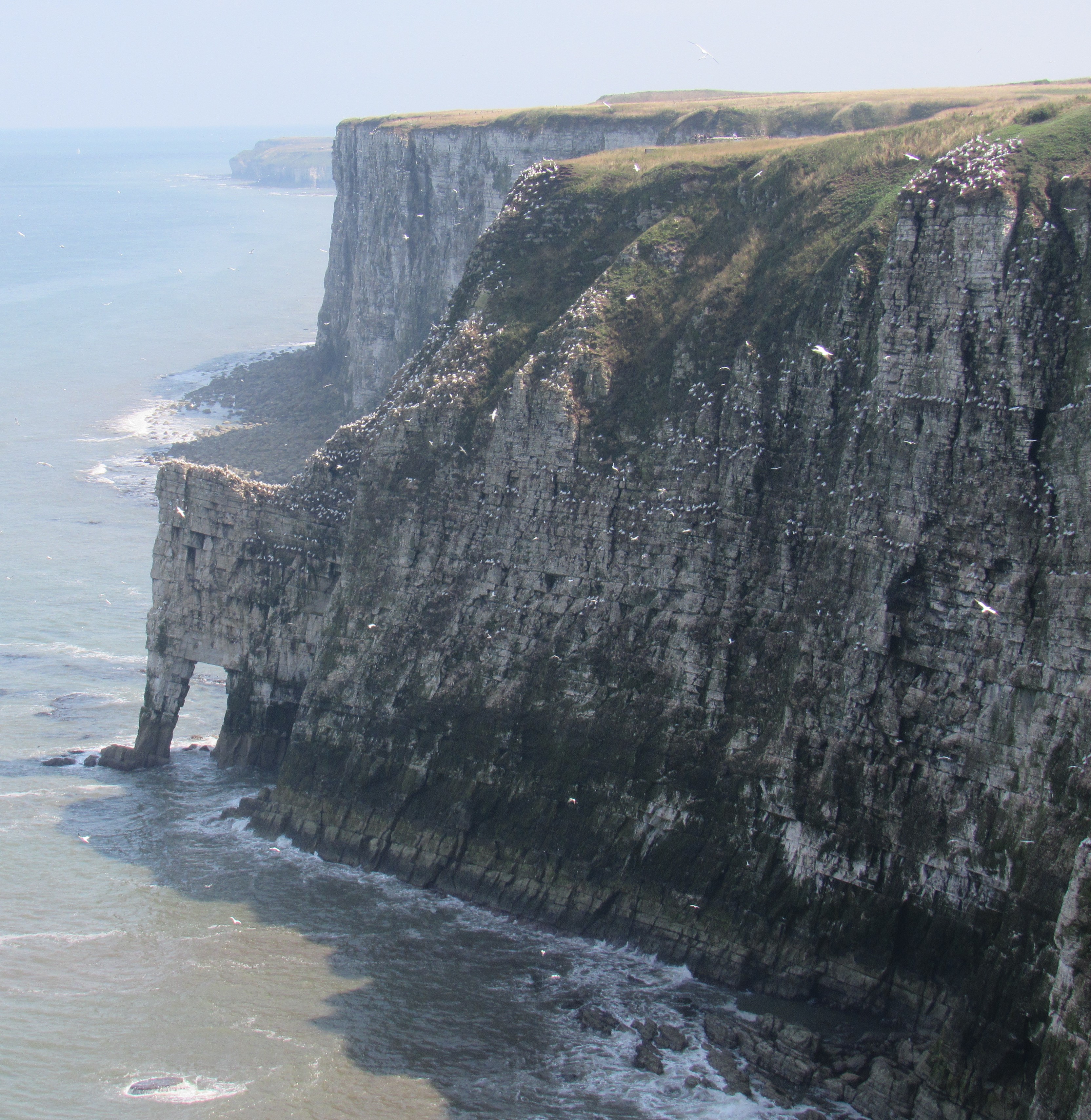
Seabirds are currently swarming to the sea cliffs of Yorkshire

FURTHER research on the impact of offshore windfarms on seabirds is to be carried out this summer on Yorkshire's Flamborough and Filey Coast.

The RSPB is hoping to recruit a senior research assistant to help track the movements of kittiwakes, gannets,  guillemots and razorbills that have been fitted with GPS logging devices.

Says the charity: "A rapid increase in renewable energy generation is key to combat climate change and mitigate its effects on people and ecosystems all over the world. 

"However, renewable energy developments can also have negative impacts on species through direct mortality or habitat loss which have to be considered in the planning process. 

"For offshore wind energy developments, these effects can be hard to predict and even harder to observe as empirical data is scarce for interactions that occur far offshore. 

"One way to address this gap in knowledge is to use bird-borne devices such as GPS loggers to study the distribution and behaviour of seabirds in and around windfarms."

It continues: "Over the last decades, tracking seabirds with bird-borne devices such as GPS loggers has been able to provide unique insights into their offshore life. 

"The knowledge gained from this approach helps drive and focus conservation action all around the world, and the RSPB is now one of the front runners when it comes to its employment in an offshore wind energy context."

Accommodation will be provided at Bempton for the successful candidate, and the contract, beginning in May, is for 5.5 months with wages equivalent to an annual salary of £23,939.00 - £26,558.00.

The role is not for beginners.

Says the job description: "It will involve the planning, coordination and delivery of the tracking and monitoring work on four seabird species in a close-knit team.

"It will also include temporary line management of up to two research assistants, data management, basic data analysis, report writing, the programming and deployment of remotely downloadable tags, the set-up as well as maintenance of the data download network (e.g., the receiver stations) and the collection of complimentary monitoring data. 

"The work will commence under training and supervision by a conservation scientist."

More details from: Saskia.wischnewski@rspb.org.uk


Tuesday, 15 March 2022

FLYING START TO BREEDING SEASON FOR DERBY CATHEDRAL'S NESTING PEREGRINES

Bird and egg - a member of the project team took this shot from the webcam 


The following report has been posted on the website of the Derby Wildlife Trust.  

We are thrilled to announce that the Derby Cathedral peregrine female has laid her first egg.

Peregrines have been nesting on the cathedral tower since 2006, and this year a new record has been set  with the first egg being laid on March 8, nine days earlier than last year..

As at other cathedrals and churches, the nesting activity at Derby can be watched via live webcam.

Says Nick Brown, who set up the project: "The mild winter may explain why urban peregrines across the UK seem to be laying earlier this year. 

"Once an egg is laid, the site becomes an ‘active nest’ and it is illegal to disturb it, so we just got there in time! 

"With luck, she will lay three more eggs with two day gaps between each one making a complete clutch of four."

The project is a partnership between Derbyshire Wildlife Trust, which manages the project, Derby Cathedral, Cathedral Quarter and Derby City Council.

The birds can be watched at  Derby Cathedral Peregrine Project - 2022 (derbyperegrines.blogspot.com)


Derby cathedral - photo by Nick Moyes, via Wikipedia


Thursday, 10 March 2022

SUPERMARKET CHAIN TO END SALE OF DISPOSABLE BARBECUES TO HELP SAFEGUARD COUNTRYSIDE


Fire risk when used irresponsibly


ALDI has become the first UK supermarket to ban the sale of disposable barbecues nationwide in a bid to safeguard coast and countryside.

The barbecues pose a problem because they create fire risk, threaten wildlife and create litter.

The ban across all Aldi UK stores will also lead to the removal of approximately 35 tonnes of single-use waste packaging.

Says Liz Fox, the chain's corporate responsibility director: "We are committed to reducing our impact on the environment and know that many of our shoppers are increasingly looking to do the same."

It is undertood that other retailers, such as Waitrose, are also looking to cease sales of disposable barbecues.

Co-op does not sell such barbecues in shops located with a 100-mile radius of national parks. 

The move has been welcomed by Amanda Craig, director of people & nature at Natural England, who comments: "We welcome any step that helps people act more responsibly whilst enjoying the countryside."

Aldi previously stopped selling disposable barbecues at its Buxton store, located close to the Peak District National Park, in June last year.

Disposable Bye-Bye-Q!
Too often spent barbecues are left as litter


Tuesday, 8 March 2022

PROPOSED CAFE EXTENSION AT RSPB WETLAND RESERVE WILL HAVE SUPERB VIEWS OVER LAGOON

Image supplied by Addison Rees to indicate the proposed look of the cafe extension 

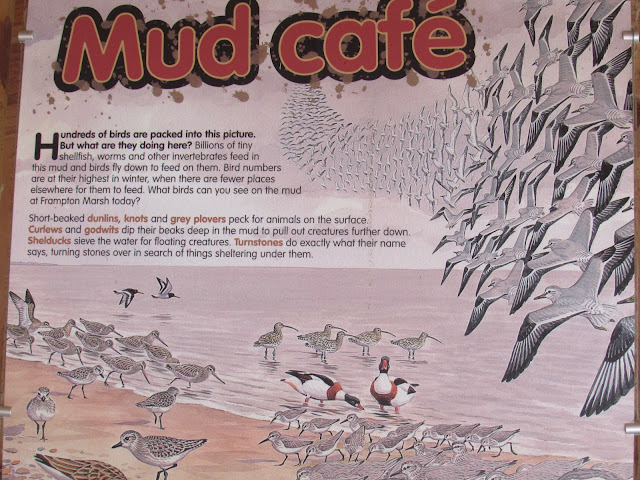
A NEW café extension is in prospect for the visitor centre at the RSPB reserve at Frampton Marsh, near Boston in Lincolnshire.

The planning application was submitted to Boston Borough Council last July but not approved until November after the Environment Agency raised flood risk concerns. 

However, the authority indicated that it would pause its objection subject to either "the provision of an area of safe refuge or submission of an appropriate flood warning and evacuation plan to the local planning authority".

Both these conditions are understood to have been met, and RSPB staff will be trained on flood evacuation procedures.

The café will be a modular single-storey, flat-roofed building that will link with the existing visitor centre/hide.

The building's external walls will be timber-clad, its roof will be in sheet materials, and it will have extensive areas of glazing in its north-eastern elevation (which will have superb views over  the lagoon and reed beds), plus four glazed doors and additional windows in its south-western elevation. 

It will measure approximately 21m x 8.8m  and stand approximately 2.8m high.

Curiously, despite the reserve being run by the RSPB, the application still had to undergo an independent ecology assessment which was carried out by Sophie King of Bowland Ecology which is based in Clitheroe, Lancashire.

In her report, she  cautioned: "Construction of the newcafé and the car park extension has the potential to disturb nearby breeding and passage / over-wintering birds.

"The wetlands, open water and reedbed are considered particularly sensitive as they provide functionally linked land with The Wash Special Protection Area. 

"To avoid impacts, the timing of any works with the likelihood of resulting in disturbance should avoid sensitive periods. 

"This includes the breeding period and during cold periods in the winter when flushing birds would cause them to expend valuable energy reserves." 

Ms King recommended that construction should take place  between the months of September and November (inclusive), but it seems this has not been possible.

Mitigation measures suggested by the ecologist have included the installation of a sound and visual barrier between the works area and sensitive wetlands. 

She continued: "Monitoring during construction should be conducted by the RSPB and contractors should be flexible and adapt to RSPB advice."

Agent for the scheme has been David Addison of Worcester-based AddisonRees Planning Consultancy Ltd which last year worked on similar café projects at two other RSPB reserves - those at Llandudno Junction in Conwy and at the charity's HQ in Sandy, Bedfordshire 

Mr Addison's report states: "The visitor centre has been able to offer self-service hot drinks by means of a hot water dispenser, with cold drinks available from a small fridge. 

"Cold snacks such as crisps and cakes have also been available. 

"Between March and October locally produced ice-creams and sorbets are stocked in a freezer unit."

His report continues: "Outside the visitor centre, there are five picnic benches at varying distances from the main entrance.

"The proposed café will replace and build upon the current food and drink availability at the site as well as providing a more comfortable indoor area for visitors and dedicated WC facilities.

"Furthermore, the building will also incorporate a small office to assist in the RSPB’s management and administrative duties."

Proposed opening hours of the new café facilities are 9:30am to 4:30pm seven days a week, with occasional evenings for events.

The project did not go before Boston Borough Council's planning committee, but was determined by case officer Simon Eldred under delegated powers.

In his approval report, he states: "Within the countryside, small-scale development to support the visitor economy will be allowed  provided the proposals do not conflict with neighbouring land uses, are in keeping with the character of the locality and demonstrate a functional link with an existing rural attraction.

"The proposed café  is undeniably small in its scale and has a clear link with an existing rural attraction - the RSPB reserve and visitor centre. 

"The application site and its surroundings, though remote from any settlement, do not have a wildor lonely visual character, with the neighbouring visitor centre building, cinder-surfaced footpaths, a picnic area and, in the wider landscape, a car park, hides and large pieces of artwork. 

"In this context, it is considered that the proposed building will not appear out-of-place, particularly given its modest size and proposed materials."

The target date for completion of the project is not known - nor whether a celebrity twitcher will be invited to cut the ribbon at the formal opening.

The  picnic area and the section of the reedbed trail which runs through it are closed until further notice to allow the project to progress

The Frampton Marsh reserve covers about 170 hectares.


The entrance to the visitor centre as it is now

General view of the 170-hectare reserve which is a magnet for wading birds and raptors, some of them rare  


The birds have their own café  so why not one also  for their many admirers?


Sunday, 6 March 2022

BYGONE BIRDING: WHEN SWALLOWS 'HIBERNATED' DURING WINTER IN SUSSEX SEASIDE CLIFF

From an edition of The  Zoologist journal published in 1849


A labourer named William Joyce who is now employed in excavating part of the East Hill for the foundation of a house, told me yesterday of an interesting incident in the month of December about 15 years ago.

While he was working for Mr. William Ranger, who had the contract for cutting away the  White Rock which used to stand between this place and St. Leonard's, the men found an immense quantity of swallows in a cleft in the rock. 

The birds were clinging together in large "clots," and appeared to be dead, but were not frozen together, nor were they at all putrid or decayed. 

The men carried out at least three railway-barrows full of the birds which were buried with the mould and rubbish from the cliff as it was wheeled away. 

Some people from the town carried away a few of the birds to "make experiments with" but Joyce never heard any more of them. 

He mentioned the names of four persons now in Hastings, who were then his fellow labourers, and he  says, that 40 or 50 of Mr. Ranger's workmen were on the spot when the birds were found, and can confirm what he says, both as to the finding and the very great quantity of the birds. 

There are many crevices in the seaward surface of the cliffs about here.

These apparently penetrate the cliff for several yards. 

The birds were found about ten feet from the surface of the rock facing the sea, and not very high up.  

Edward Brown Fitton

Hastings

September 8th, 1849