Tuesday, 9 February 2021

RSPB SCOTLAND ALERT OVER HEBRIDEAN WINDFARM THREAT TO SEA EAGLES AND RED-THROATED DIVERS

Site of the proposed windfarm  near Stornoway  on the Isle of Lewis

A PROPOSED windfarm on the Isle of Lewis in the Outdoor Hebrides could take a serious toll on rare raptors and divers 

That is the fear of RSPB Scotland if a 33-turbine windfarm  near Stornoway goes ahead.

The charity is calling for the development to be reduced by at least six turbines to reduce "significant negative impacts" on important bird populations on Lewis.

It says the projections of the developers are that, over the 25-year life span of the windfarm, the fatality figures as a result of collisions with turbine blades will be as follows:

* 16 white-tailed eagles

* 12 red-throated divers, 

* 8 golden eagles

* 4  hen harriers 

Back in 2012, planning consent was granted for the project but, because of a delay in establishing a grid link to mainland Scotland, it has never been built.

However, with such a connection now likely to proceed, the developer has returned to the project, but with larger turbines - up to 180 metres in height -  with an increased development footprint.

RSPB Scotland points out that these numbers of collisions would have a significant impact on the size of future populations of all four of these species across Lewis.

In a statement, it says: "In addition to these predicted collisions with turbines, birds are also at risk from displacement and disturbance. 

"Several turbines are proposed close to the nesting and roosting areas of red-throated diver and hen harrier. 

"These species are sensitive to disturbance and usually nest and roost away from areas of human activity and development. 

"By placing turbines so close to breeding and roosting sites, these bird territories could be lost completely or birds attempting to nest would be disturbed which could result in nest abandonment." 

There are established guidelines for ‘disturbance free’ areas around nest sites of sensitive species, but RSPB Scotland is concerned that this guidance is not being followed by the developer, Lewis Wind Power - a joint venture between EDF and Scottish infrastructure company Wood plc.

The charity is particularly concerned about the effect on a  population of hen harriers that has established in the area since 2015 and now numbers approximately 10 pairs. 

In 2018, the remains of a dead golden eagle that had collided with the neighbouring Pentland Road Windfarm were found. 

And last year, white-tailed eagle was rescued near the same wind farm with severe injuries thought to have been caused by a turbine collision. This bird subsequently died in captivity due to the extent of its injuries. 

These two suspected eagle collisions were recorded  recorded just a few years into the operation of a windfarm with just six turbines.

Lewis Wind Power say that, if developed, the  project would benefit the community to the tune of £900,000 per annum in community grants plus as much as £1.3-million in rental income to local crofters and the Stornoway Trust.

The scheme is currently under consideration by planners at Comhairle nan Eilean Sar council.

Monday, 8 February 2021

PRINCESS REALLY ENJOYS HER RUGBY - BUT IS SHE ALSO A BIT OF A BIRDER?


Good to see that there is some ornithological presence in the home of the Princess Royal and her husband, Vice Admiral Sir Tim Laurence, pictured on her Instagram account as they watch last weekend's England v Scotland rugby match on TV. One of the books on the coffee table is a Field Guide to the Birds of Britian and Europe.

Sunday, 7 February 2021

THE WAITING GAME: FINGERS CROSSED FOR BIRDFAIR 2021 - BUT ONLY TIME WILL TELL


Let us in! But will there be a Birdfair in 2021?

A CAUTIOUS note on prospects for Birdfair 2021 has been sounded by the  Leicestershire and Rutland Wildlife Trust which hosts the event at Rutland Water.

Although there are hopes that the pandemic may be on the wane, it is still unclear how soon festivals will be able to resume.

says the Trust's chief executive, Tim Graham: "We are still watching the news about Covid-9 very closely to decide whether Birdfair 2021 will be able to go ahead. 

"We will be making contact with everyone and intend to provide updates later this month and in  March."

Tim Graham - watching closely

The cancellation of last year's event caused both administrative and financial headaches for the trust.

These came on top of heavy costs incurred  to make the showground safe during the 2019 event which was hit by heavy rain, turning much of the site into a quagmire.

This also led to fewer visitors and reduced income.

The departure last year, in mysterious circumstances, of its co-founder Tim Appleton  has also cast a shadow.

In a statement, Tim Graham continues: "The cancellation of the 2020 live event has meant that, unfortunately, the operating costs for the financial year 2020/2021 were unsupported, putting the continuation of Birdfair at risk. 

"After negotiations with The Wildlife Trust’s Strategic Development Fund and Emergency Covid funding from the National Heritage Lottery Fund, the trust has managed to secure bridging finance for Birdfair until March 2021 to help it reach and resume normal operations.  

"I am sure you will agree this demonstrates a strong commitment to the future of the event."

He concludes: "We are very proud that, since it began in 1989, Birdfair has raised over £5 million for nature conservation. 

"It has helped birds from albatrosses to white-winged guans and help to protect ecosystems that are under threat of extinction across the globe. 

"I should like to take this opportunity to thank everyone who works so hard to make it such a success."

Below: pictures from previous Birdfair years


Friday, 5 February 2021

FROM GODWITS TO WAXWINGS! EXPERT SPEAKERS IN TOP FORM AT BTO-LINCOLNSHIRE CONFERENCE


Watching out for waxwings - could we see a late-winter irruption? 

More than 130 logged in to last Saturday's virtual conference organised jointly by the BTO and the Lincolnshire Bird Club and held via Zoom. 

In his introduction, LBC chairman Phil Espin commended co-organiser Chris Gunn for her passion, drive and organisational flair. 

He went on to express delight that attendees were logged in from  all over England, plus one in the Isle of Man. 

Phil Espin

Phil went on to publicise his club's latest publication, Lincolnshire Bird Atlas 1980-1999: An Historical Perspective and its forthcoming sister-volume, Birds of Lincolnshire, due out next month. 

Then he handed over to Dawn Balmer who expertly chaired the proceedings.


Jenny Gill

The impressive population expansion of black-tailed godwits in Iceland and the UK was the focus of a presentation by Prof Jenny Gill, chairperson of the BTO board.

This surge has been measured not so much by technology as by old-fashion colour-ringing carried out by observers - "godwiteers" - across Europe.

Apart from providing pointers to distribution and migration, this methodology has revealed that some birds live into their early 20s.

Jenny Gill

The species appears to have been a beneficiary of global warming.

New breeding habitat has appeared in parts of Iceland that were formerly too cold, and egg-laying dates are now earlier.

And research has revealed that chicks hatched earlier are more likely to survive - possibly because quicker-growing grass conceals nestlings and eggs alike from predators such as Arctic foxes, ravens  and skuas.

The breeding success has resulted in a "dramatic increase" in migrating and over-wintering birds in British estuaries.

Most of those seen further south and west are likely to be older birds while those in Eastern England are predominantly first-winter newbies.

Any downsides? Apart from predators, the main threat is ash thrown from erupting Icelandic volcanoes which is likely to kill the invertebrates on which godwits feed.

In concluding, Jenny referred to an authoritative and entertaining blog: 

https://wadertales.wordpress.com

John Badley

Fascinating insights into the management of the RSPB reserve at Frampton Marsh, near Boston in Lincolnshire, came from senior site manager John Badley who is also a Lincolnshire Bird Club member.

John took over the reins some 20 years ago having previously worked alongside shorebird expert Peter Potts  in The Solent, the strait that separates the Isle of Wight from the mainland.

The site at Frampton was first earmarked by the charity  as a superb location for a reserve largely on the basis of its  massive saltmarsh which has always attracted huge numbers of redshank, Brent geese and various species of raptor.

Since its creation in 1984, funding from a National Lottery grant has enabled expansion of the site, allowing creation of  freshwater habitat with water that is pumped in from ditches to sit atop the silt-clay base.

A peat-rich soil would probably be preferable - not least for encouraging black-tailed godwits to nest - but, notwithstanding, the reserve has been a huge success, both for birds and for birders (more than 50,000 visitors a year). 

On the subject of waders, John said: "We can't make them come to Frampton but we can encourage them to want to stay."

Apparently scrapes are relatively straightforward and inexpensive to create, and, in these, nesting avocets quickly became established.

John Badley

In a short space of time, there were no fewer than 100 pairs either at Frampton or, subsequently, at its sister reserve at nearby Freiston Shore.

These flourished early on because rotting vegetation attracted invertebrates. 

However, as expected, their  numbers dipped in later years because an increase in fish provided competition for the invertebrates.

John introduced a concept that was probably unfamiliar to many of the conference attendees - that of the "hydrological unit"

For the sake of diversity it is preferable to have a variety of watery habitats rather than one alone.

Managing such units needs to be rigorously monitored but it has consistently paid off in attracting large numbers of a huge wetland species - from whooper swans to little ringed plovers (19 pairs at the last count) to lekking ruff at the end of May. 

Known as "dynamic transient management", the methodology , which involves rotating scrapes and intermittently allowing them to lie fallow, then flooding them, is scrupulously plotted.

The dividends come in the form of one mouth-watering rarity after another.                                                            

Stilt sandpiper and red-necked phalarope

Enthused John: "Stilt sandpiper, red-necked phalarope, black-winged pratincole  . . . . we live for moments like this. 

Inevitably, every day brings new challenges.

Proliferation of reed rush is an issue but John and his team believe the proposed introduction of grazing Highland cattle could has help to tackle it.

But the beasts will have to be managed or they are liable to trample on ground-based nests.

New Zealand pygmy weed is also a nuisance because it loves to colonise bare mud - the very type of habitat favoured by many small waders.

Meanwhile, foxes, badgers and even otters present an ever-lurking menace to birds, so mammal proof fencing has been installed at those points of the reserve deemed  most vulnerable.

The team at Frampton are always learning, and they swap ideas and  notes with other RSPB reserves such as those at Minsmere, Titchwell and Dungeness

"We're never satisfied," says John. "We're always tweaking."

Any prediction of which wader species might next choose to breed at this fabulous Lincolnshire reserve?

"Who knows," says he. "Glossy ibis is on the cards. And maybe black winged stilt - yes that, too, is definitely on our radar."

                                       Dawn Balmer

Dawn Balmer, who is  head of surveys at the BTO's HQ at Thetford in Norfolk, focused her presentation on how birding records are collated across Europe by a range of organisations

It was enlightening to see the extent to which species populations in Britain are mirrored by those in other parts of continental Europe.

For instance, while willow warblers are in decline, blackcaps are increasing.

Dawn Balmer

Particularly fascinating was Dawn's exploration of the online Europe Bird Portal which captures the densities of bird distribution at any given time.

Most swallows, for instance, are just beginning their migration north but some have already reached France, with a few even further north. 

Because it is such an iconic  species - and obviously of particular interest to conference attendees - Dawn swooped on the waxwing.

So far, though currently widespread in Finland and Sweden, this delightful bird has been sparsely distributed in Britain for most of this winter.

But could all that be about to change?

With heavy snow blanketing much of Scandinavia, waxwings may yet  soon be on their way to our shores, encouraged by the imminent winds blowing in from the North and the East.

 Simon Gillings

Things that go 'tseep' in the night - that was the intriguing title of the presentation from Simon Gillings of the BTO.

It proved to be a fascinating run-through of the extraordinary range of birds he has audio-recorded  after dark at his home in a relatively built-up area on the outskirts of Cambridge.

Over the past couple of decades, the advent of advanced listening and recording technology has increased the popularity of monitoring 'nocmig' - nocturnal migration.

It may lack the poetry of listening out for the call-notes of redwings or seeking to detect the silhouettes of birds as they fly across the face of a full moon.

Simon Gillings

But it has a romance of its own - and is definitely more efficient.

"Nocmig has definitely taken off over the past few years," said Simon. "It has been especially popular during lockdown. It has given a new dimension to birding"

For him, it all started on March 15, 2017,  when the species that drew his attention was a calling moorhen.

This has proved to be something of a regular 'night-owl', with birds - apparently participating in territorial flights - heard almost every night in spring and summer.

But more remarkable have been some of the other species - the likes of whimbrel, quail, whooper swan, ring ouzel, little grebe, spotted redshank and even sandwich tern.

Although redwings are frequently picked up, fieldfares seem to be more silent at night, while warblers are virtually mute.

Unfortunately, the equipment that records the bird is unable to detect the height of the birds - for that, radar would be required.

At the last count, Simon had logged no fewer than 87 different species over his home - not to mention quite a few that, to date, remain unidentified.

"One of these is possibly an ortolan bunting," he says ruefully. "But along with a fair few others, it remains in the file marked  'Pending'. 


Black-tailed godwit - watch out for colour-ringed birds

Sunday, 31 January 2021

SUPERB BOOK CASTS SPOTLIGHT ON RETURN OF MAGNIFICENT RAPTOR TO SCOTTISH ISLES

John Love's definitive study

BACK in 1983, John Love wrote The Return of The Sea Eagle, a fascinating study of how a raptor lost to the UK as a breeding species since 1916 had successfully been introduced on the Hebridean island of Rum from Norway.

Although the project probably attracted few headlines than similar initiatives to restore two other birds - the osprey at Loch Garten on Speyside and  the avocet at Minsmere in Suffolk - it was, in its own way, more of a challenge and hence more impressive.

Since then, the sea eagle has become established, notably on the islands of both Mull and Skye, with the spin-off benefits  of providing a massive boost to tourism and of safeguarding commercial mussel farms from eider duck which are terrified of eagles.

Love's 1983 book is now out of print, and, as an ornithology classic, attracts high price on the secondhand market.

Happily, the same author has  also published an even more authoritative follow-up, A Saga of Sea Eagles, which picks up the story from 1983.

It was written too soon to accommodate material about the latest initiatives on the Isle of Wight, but it is a cracking book - fast-paced, full of information and anecdotes, plus an appendix listing the population status of sea eagles in individual countries throughout the world.

There is also a particularly interesting section on the bird's varied prey (no fewer than 143 items).

Apparently, it is not uncommon for the species to attack  seal pups, sometimes even those that are quite bulky.

Love quotes an incident on a Scottish isle  where a seal dived, hoping to escape an attack but only after the bird had sunk its talons into the back of the terrified mammal.

How did this gruesome incident end? "A few moments later, the eagle surfaced with both wings broken and at the point of death."

In another even more bizarre incident, a teenage girl on one of the Scottish Isles watched as what appeared to be a small sailing craft came towards shore.

As it approached nearer, the reality emerged - it was a dead cow on the body of which was a sea eagle with its wings spread. 

The hapless bird had evidently sunk its talons into the carcase, then been unable to free them.

The teenager was able to release the talons, but how did the eagle respond to this act of mercy?

By attacking the girl's thigh, ripping out some of its flesh, before flying off.

Although the girl recovered completely, the wound left her with a divot  for the rest of her life.

Although fish represents the major part of the diet of sea eagles, it is not unknown for them to take rabbits, red deer, foxes or lambs.

But what about a young child, perhaps a baby. Do sea eagles pose any threat to young human life or limb?

Over the years, there have been many legends of such incidents, but, to this day, there is not a scrap of reliable evidence that any such attack has occurred?

The author's favourite tale is of a baby snatched taken to its remote cliffside eyrie by a sea eagle after having been left by a stack while her parents were haymaking in a field on Fetlar in the Shetlands.

But the bairn was rescued,  thanks to the skill and courage of a lad who clambered up to the eyrie and retrieved her, unharmed.

You can guess what happens next. , .

Some 16 years later, the girl and her rescuer fell in love, married and lived happily ever after just as had been prophesied, so he claimed, by the teller of the tale. 

Sister-projects to that in Rum have subsequently been launched at other locations including Fife and Killarney in Ireland, but whether they will prove sustainable remains to be seen, especially as the birds are vulnerable to  persecution - notably shooting and poisoning.

They are also thought to be at risk from bacterial or viral infection from prey such as  rats or crows.

Research indicates that the eyesight of sea eagles is between three and eight times than that of a human, but the species  only has a 40 degree overlap in its field of vision compared with 120 degrees in humans.

Could this be why sea eagles are susceptible to collisions with rotating wind turbines? They see one blade but not the other two.

Tragically, Mike Madders,  a pioneer in researching the impact of windfarms on raptors, drowned, along with his young son, in Loch Maree in August, 2009.

A Saga of Sea Eagles is published by Whittles Publishing at £19.99.

https://www.whittlespublishing.com


Friday, 29 January 2021

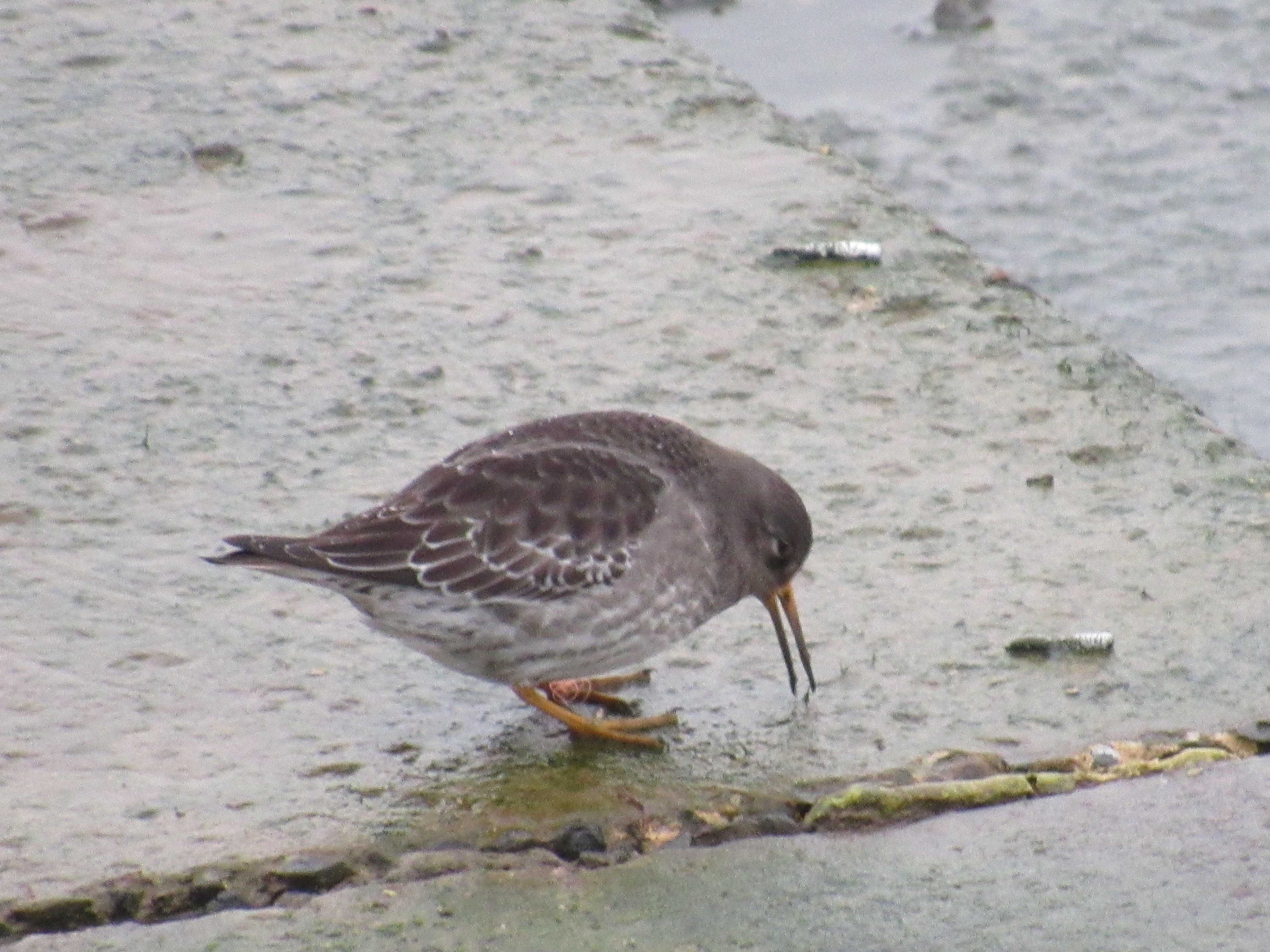
PLASTIC TWINE COILED ROUND ITS FOOT COULD PUT THIS PURPLE SANDPIPER IN PERIL


This purple sandpiper sighted earlier this week on the Lincolnshire Coast could  be in a spot of bother. Its left foot is coiled with what looks like plastic twine. The species frequently roosts on old breakwaters where the risk is of the twine being snagged on a protruding nail or splinter of old timber. For the time being, however, the bird was running freely with no indication of being inconvenienced.


Sunday, 24 January 2021

SEA EAGLES SOARING ONCE MORE ABOVE WEST NORFOLK? YES, IT COULD REALLY HAPPEN


With an eight-foot wing span, it is no surprise that  the sea eagle is sometimes described as a "flying barn door"

PLANS to introduce white-tailed sea eagles to North-west Norfolk  have generated plenty of interest from the media, including national newspapers such as The Guardian, The Daily Telegraph and the Daily Mail.

The proposed location is the Ken Hill Estate, between Snettisham and Heacham, near Kings Lynn.

This consists of some 4,000 acres where 1,000 acres have been earmarked for rewilding by the Buscali family who have farmed the  estate since the 1870s.

Already beavers have been introduced to be followed, possibly later this year, by wild pigs, ponies and cattle. 

Spearheading the project is Dominic Buscali who would also like to launch  wildlife safaris and tree-house holiday accommodation subject to nature being safeguarded

Of the eagle proposal, his intention is to draw on the experience of the Roy Dennis Foundation which masterminded the re-introduction, two years ago, of the species to the Isle of Wight, initially by releasing 13 birds.

Before the Norfolk scheme proceeds, there will be a feasibility study to assess potential benefits, costs, opportunities and risks associated with a reintroduction. 

More information at: www.roydennis.org or www.wildkenhill.co.uk